
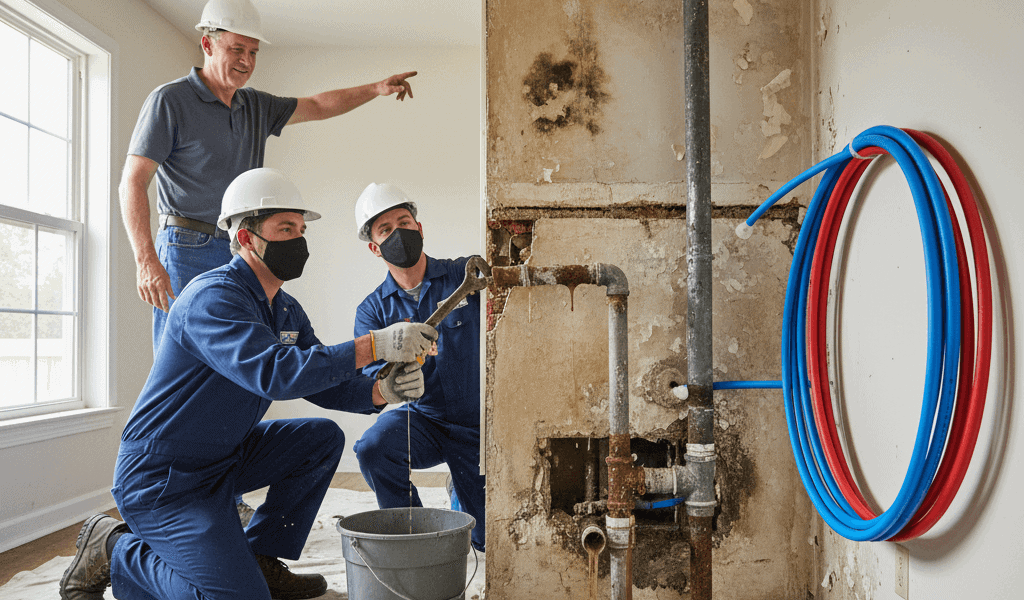

Deciding to repipe a house can feel like a big deal. Sometimes one leak shows up, and it’s tempting to just patch it up. Other times, rusty water sneaks out of the faucet, making you worry about health risks. Clear signs show when repiping is a must, like old pipes causing constant trouble and water quality that just won’t pass the test. Imagine the relief when fresh, clean water flows freely, making your home safer and more comfortable. Knowing when to act saves money and headaches down the road. Keep reading to discover how to spot those hidden warning signs and make the smart move before problems pile up.
Reading this will help you weigh risks and benefits, understand typical timelines and costs, and prepare for the process so disruption is minimal. You will find real examples from common situations and a checklist for talking with contractors.
Common warning signs that repiping is needed
Not every plumbing issue means the whole system must be replaced. Still, several recurring signs often point to the need for a full repipe. Watch for these patterns in your home.
- Frequent leaks that appear in multiple places over time suggest a systemic problem rather than an isolated failure.
- Persistent discolored water such as brown or red tints signals rust or corrosion inside pipe walls.
- Low water pressure that cannot be fixed by repairing a faucet or clearing a fixture often indicates scale build up or blockages in older piping.
- Visible corrosion on exposed pipes in basements, crawl spaces, or under sinks is a direct sign of deterioration.
- Repeated clogs and backups in different drains can mean the piping network is compromised and allowing debris to collect.
- Lead or chemical test failures from water testing show contamination that sometimes only full replacement removes.
How pipe material affects lifespan and replacement timing
The type of material used in your plumbing strongly influences when repiping becomes necessary. Each material has a typical service life and distinct failure modes to watch for.
- Galvanized steel was common in homes built before the 1960s through the 1980s. These pipes often last 40 to 70 years but suffer internal rust and mineral clogging over time.
- Copper resists corrosion for many years and can last 50 plus years in the right conditions. Leaks can still occur from pinhole corrosion especially when water chemistry is aggressive.
- PEX is a flexible plastic tubing that performs well and may last 40 years or more. It is less prone to freezing breakage in some installations.
- Polybutylene was used in the 1970s through the 1990s and is known to degrade when exposed to certain oxidants. Replacement is common when these lines show age.
- PVC is mostly for drain and vent lines. For supply lines, modern plastics such as PEX are preferred.
Health and safety reasons to repipe without delay
Health concerns make repiping more urgent than cosmetic or convenience reasons. If water tests show lead, high iron, or bacterial contamination, replacement may be the most effective remedy.
- Lead exposure is hazardous for children and pregnant people. Lead can leach from older solder joints and certain pipe alloys. When tests reveal elevated levels, replacing drinking water lines and interior piping is the safest route.
- Rust and heavy metals not only discolor water but can stain fixtures and clothing and indicate advanced corrosion that will worsen.
- Biological growth such as bacterial film can form in deteriorating pipes and contribute to odor or taste problems that treatment alone will not fix.
Financial considerations and long term savings
Repiping is a significant expense up front yet it often reduces ongoing costs. Understanding the financial trade offs helps decide whether to patch or replace.
- Immediate expense varies by home size, pipe material chosen, and access. Expect a range rather than a single number and get multiple estimates.
- Repair costs over time can add up when leaks recur and water damage requires drywall, insulation, or flooring repairs.
- Insurance and resale value may be affected. Some policies respond better when a known risk is removed. Buyers often pay more for a house with recent updates to major systems including plumbing.
- Energy and water waste from leaks raises monthly bills. Replacing failing pipes can reduce consumption and accidental water loss.
The repiping process step by step
Knowing what to expect makes planning easier and reduces stress. The process typically follows assessment and planning followed by the physical replacement and cleanup.
Assessment and planning
An inspector will map the current system, test water, and locate hidden runs. Expect a discussion about options for pipe material and routing. Good planning minimizes surprises during installation.
Installation and cleanup
Installation can take days to a week depending on the size of the home and the chosen approach. Technicians will shut off water, remove old lines where accessible and install new ones. Expect some noise and limited access to water for portions of each day. A thorough job includes testing, insulating exposed lines where needed and restoring basic finishes where pipes were accessed.
Minimizing disruption during a repipe
Here are practical tips to keep your daily routine as normal as possible while work proceeds.
- Plan temporary water access for drinking and basic hygiene. Bottled water helps on day one.
- Label important valves and shut offs with simple tags so they can be used during the project if needed.
- Clear work areas and provide access to basements, attics or crawl spaces before crews arrive.
- Request a timeline with milestones so you know when bathrooms and kitchen water will be restored.
How to choose a contractor and what questions to ask
Selecting the right team reduces risk and ensures a better outcome. Look for licensed plumbers with local references and clear written estimates. Ask these specific questions during your vetting process.
- What materials do you recommend and why
- Do you provide a written scope of work and a firm price range
- How do you protect floors and personal property during work
- What permits are required and who obtains them
- Are warranties provided on parts and labor and how long do they last
Request references from recent repipe projects with similar homes. A contractor who documents the project with photos and test results provides useful evidence the job was done correctly.
When whole house replacement is preferable to partial repairs
Sometimes replacing a few sections of pipe fixes an immediate issue. Other times removing and replacing the entire system is the prudent course. Consider a full replacement when problems are distributed across the home or when the pipe material is known to fail as a group. A whole system swap avoids repeated service calls and patchwork repairs that raise costs over time.
If you are leaning toward a full replacement, professional options include changing to modern materials that resist corrosion and will last for decades. For homeowners who value a long term solution, exploring full system options with a qualified plumber is a smart step. Local companies often offer specialized inspection services and financing plans that make a full upgrade more manageable. For example one reputable provider lists resources and service options for complete system work that cover planning, installation and final testing with a clear warranty. You can learn more about their offerings by checking whole-home repiping services
Signs a recent repair did not address the root cause
After a repair, new symptoms such as leaks near the repaired area, recurring discoloration or continued low pressure suggest an incomplete solution. Keep documentation on any work performed and use it when meeting with a second professional for a second opinion. Sometimes the simplest fix is a temporary measure while a larger plan is put together. Know the difference between a stopgap and a permanent replacement.
Repiping is a big decision but one that can remove persistent headaches, protect health and lower long term costs. If your home shows multiple signs mentioned above or your plumbing uses older materials known to fail, schedule a full inspection. Requesting a clear written plan from a licensed contractor will give you the information needed to compare options and choose an approach that fits your budget and timing.
Ready to move forward? Start by getting a professional inspection and an itemized quote. A qualified plumber will explain material choices, provide a schedule and outline protections for your home during work. Taking those steps will help you plan effectively and make a choice that meets your needs. Contact a licensed local plumbing company today to schedule an inspection and get a written estimate for repairs or replacement.